
Нетрадиционный урок английского языка по теме «Школьная жизнь»
Класс: 7
Учащиеся пятого класса впервые пробуют себя в роли ведущего урок, что стимулирует повышенную ответственность при подаче материала. А у учащихся четвертого класса формируется повышенный интерес к изучению данного предмета.
Так как – это экскурсия по школе, прослеживается взаимосвязь со всеми предметами, изучаемыми в школе. Для пятиклассников происходит обобщение на более высоком уровне, а для четвероклассников знакомство с новыми структурами, желание понять новое и вести диалог.
Широко используется личный опыт учащихся.
Развивается критическое мышление. Учащиеся ведут диалог.
В дальнейшем повышается интерес к предмету.
Happy Thought.
(by Robert Louis Stevenson)
The world is so full
Of the number of things.
I’m sure we should all
Be happy as kings.
Идет обсуждение данных слов:
— What wonderful things are there in the world?
— Why can we call people kings?
Учитель задает следующий вопрос:
Идет просмотр видеофильма о британской школе. После этого идет обсуждение фильма и предлагается сравнить устройство школы в Британии и России. Для этого нужно отправиться на экскурсию по школе.
— What subjects do pupils study at school?
— What can they do at school?
— At what age do they begin to study?
— At what age do they finish school?
— How many days a week do they study?
— Do they have holidays? When are their holidays?
— Do they celebrate holidays at school?
Учащиеся распределяются по группам: экскурсоводы, переводчики, туристы. Каждая группа имеет свою задачу. Экскурсоводы по очереди проводят экскурсантов по школе, рассказывая об ее устройстве, кабинетах, учителях, учебном процессе. Переводчики объясняют непонятную информацию туристам. Туристы задают вопросы об интересующих их объектах.
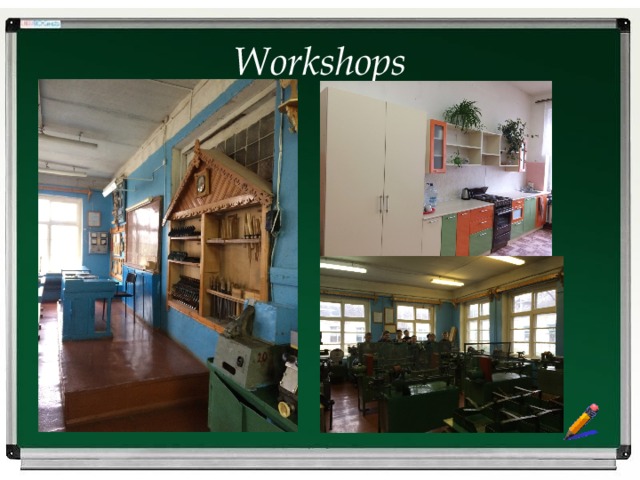
Our school has 3 floors. There is a workshop on the ground floor. It is big. There are all kinds of tools and machines there. The boys of our school have a woodwork room too. They learn to make things of wood in this room.
There is a room for work for girls too. It is on the ground floor too. They learn to cook and to sew [sou] there.
If you enter the school and go to the right you can see a dining-room. Here pupils and teachers have breakfast and dinner. The dining-room is a clean one. There are many nice flowers on the tables.
Our primary school is on the first and the second floors. We studied there last year. Our classroom was on the second floor. Our first teacher was Natalia Petrovna Svistunova. We like her very much.
Our school has a library. It is on the second floor. There are a lot of interesting books in it. We like to read its books but the library has no reading room.
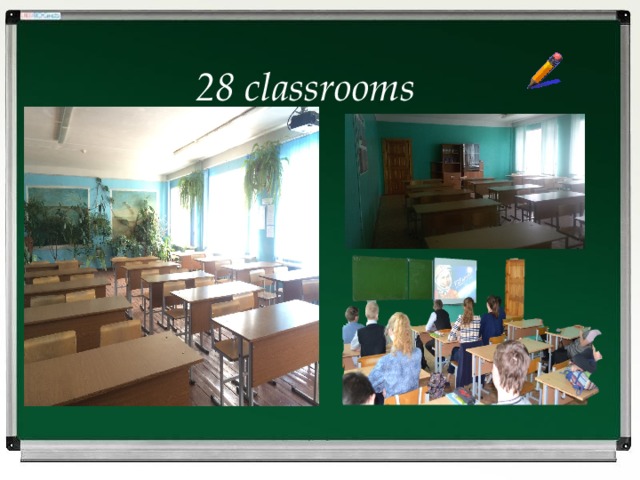
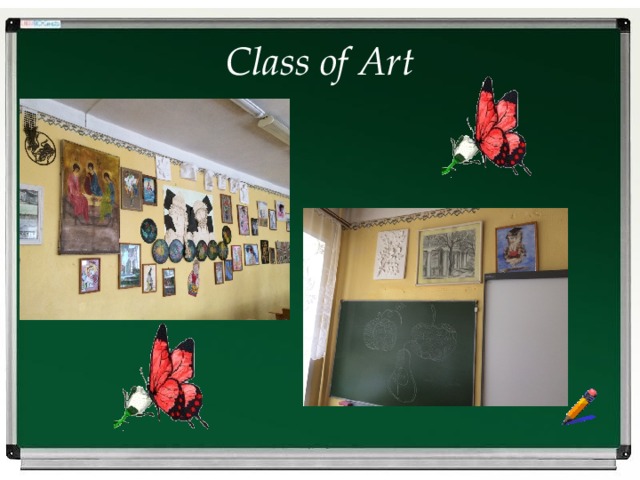
Our school has many classrooms. We have three English classrooms, two History classrooms, Geography, Physics, Russian classrooms and others. They are big and light and each of them has three or four large windows, flowers, the blackboard, desks, chairs and beautiful pictures.
Our classroom is on the first floor. It is big and large too. It has three windows with nice curtains and flowers. There are four bookcases in it. There is a blackboard on the wall. The teacher’s table with many books on it is situated not far from the blackboard. There are twelve desks and some comfortable chairs in the classroom. There is a TV set in the classroom. Sometimes we used it during the lesson.
There is a school hall on the first floor where meetings and conferences take place. We organize concerts, festivals when we celebrate our holidays. Pupils of our school sing songs and dance modern and folk dances and perform some plays there.
The teachers’ room is on the second floor. There are tables and chairs for the teachers, a TV set and a telephone there. It is comfortable and a cosy room and teachers like to spend their free time in it.
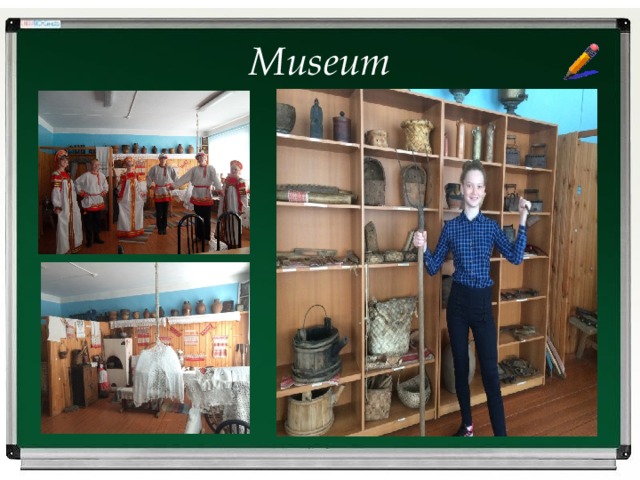
Our school museum is on the second floor too. It is very nice and interesting. Our pupils, parents and teachers made it in 1999. There are a lot of old things which help us to learn more about our past life. We like our school and go there to get knowledge, to make friends and to be happy.
После экскурсии учащиеся собираются в классе для подведения итогов. Предлагается всем заполнить таблицу “знаю-хочу узнать-узнал”.
— Для чего нужна школа?
— Какие предметы для меня важны?
— Is school important?
— What subjects are important for me?
— What will I be in future?
Стимул для продолжения деятельности.
Какие вопросы необходимо еще освятить? Как мы будем использовать полученные сегодня знания? В какой школе вы бы хотели учиться?
Домашнее задание: написать сочинение на тему: “В какой школе я бы хотел учиться”. “School of my dream”.
Экскурсия по школе
презентация-экскурсия по школе на английском языке рассказывает о сандовской средней школе.
Содержимое разработки
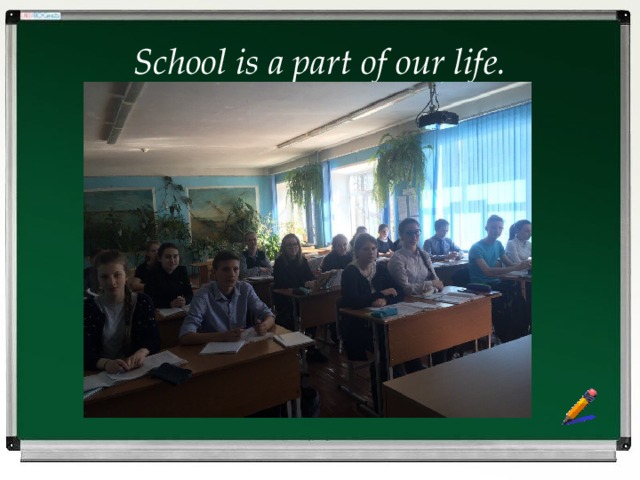
School is a part of our life.
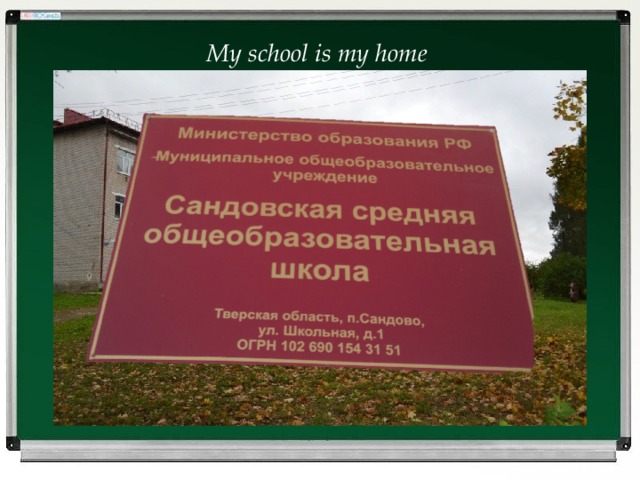
My school is my home
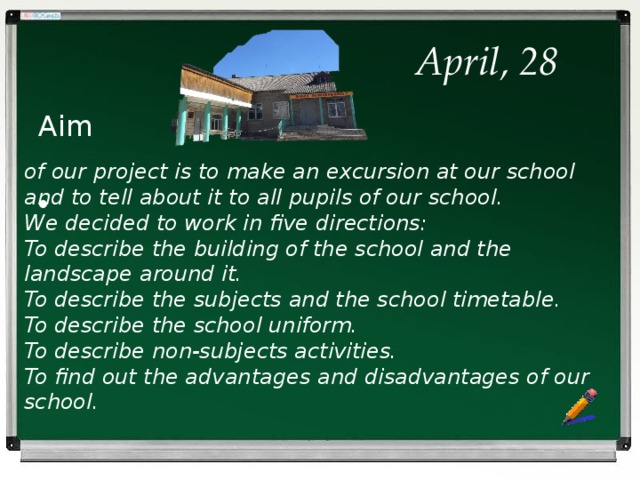
of our project is to make an excursion at our school and to tell about it to all pupils of our school.
We decided to work in five directions:
To describe the building of the school and the landscape around it.
To describe the subjects and the school timetable.
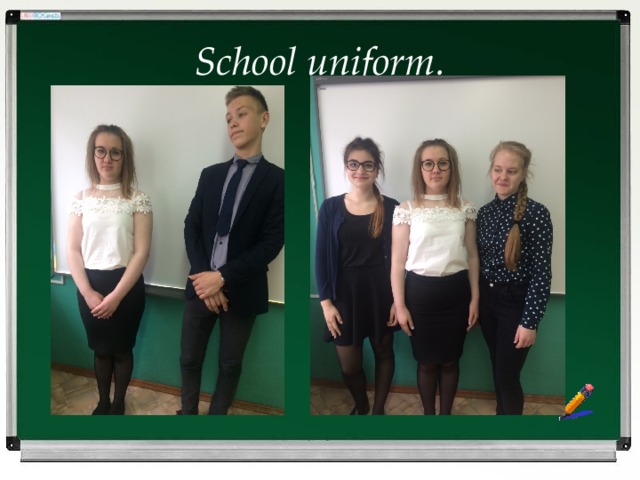
To describe the school uniform.
To describe non-subjects activities.
To find out the advantages and disadvantages of our school.
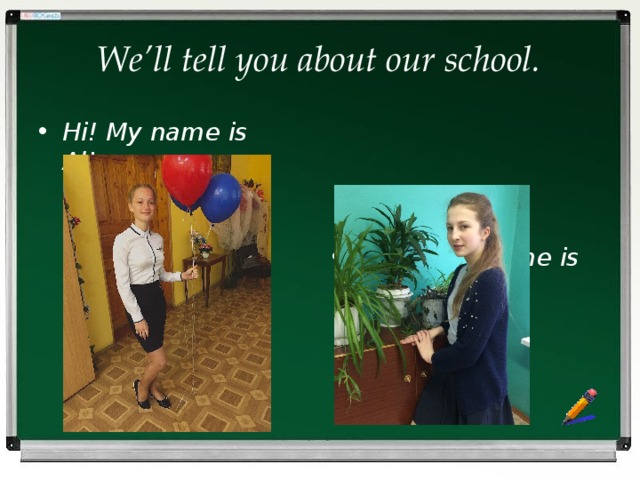
We’ll tell you about our school.
We’ll tell you about our school.
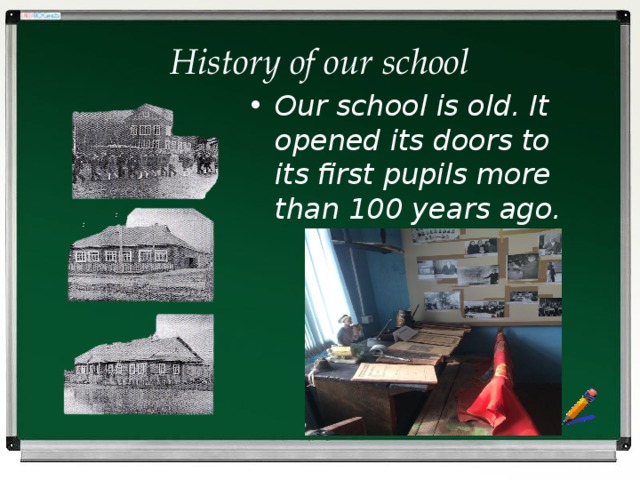
History of our school
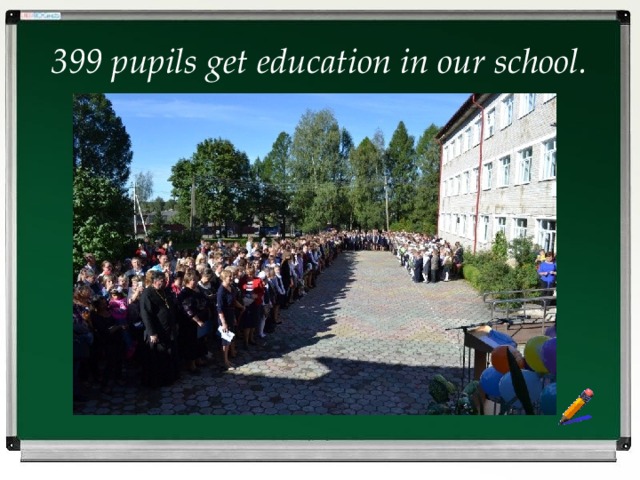
399 pupils get education in our school.
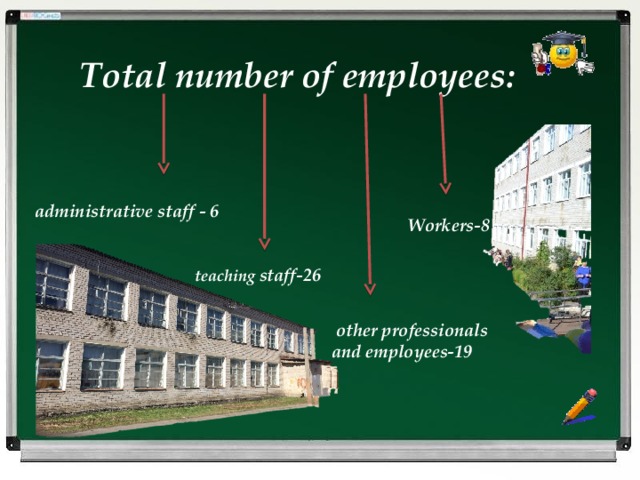
Total number of employees:
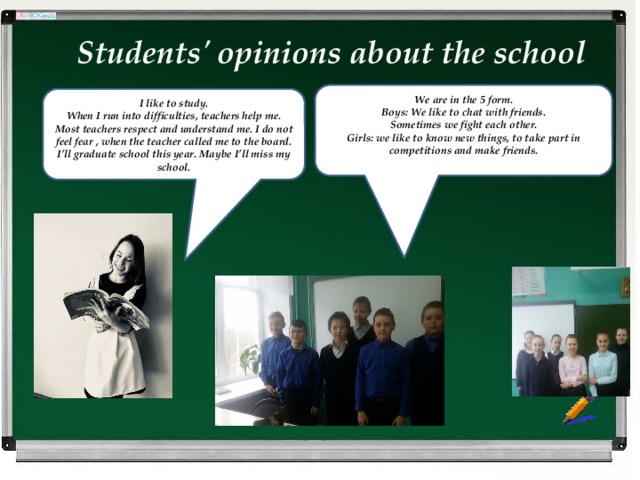
Students’ opinions about the school
We are in the 5 form.
Boys: We like to chat with friends.
Sometimes we fight each other.
Girls: we like to know new things, to take part in competitions and make friends.
When I run into difficulties, teachers help me.
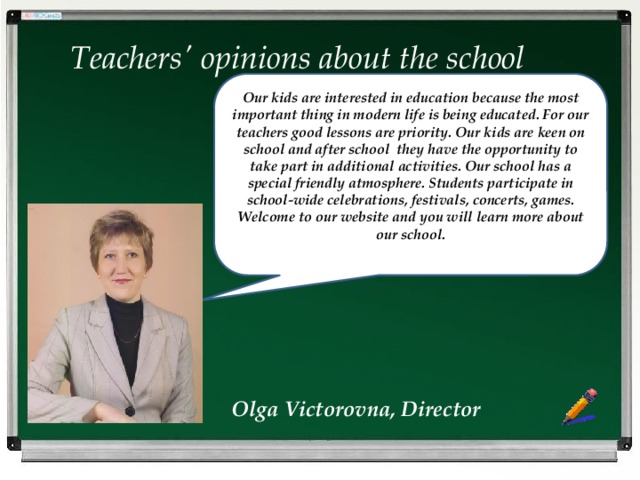
Teachers’ opinions about the school
Our kids are interested in education because the most important thing in modern life is being educated. For our teachers good lessons are priority. Our kids are keen on school and after school they have the opportunity to take part in additional activities. Our school has a special friendly atmosphere. Students participate in school-wide celebrations, festivals, concerts, games. Welcome to our website and you will learn more about our school.
Olga Victorovna, Director
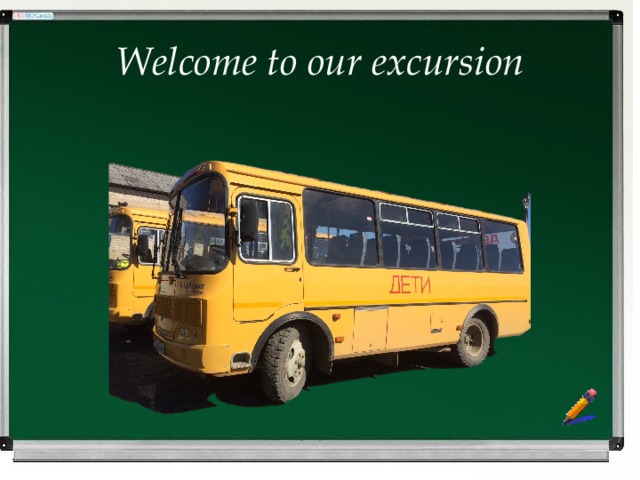
Welcome to our excursion


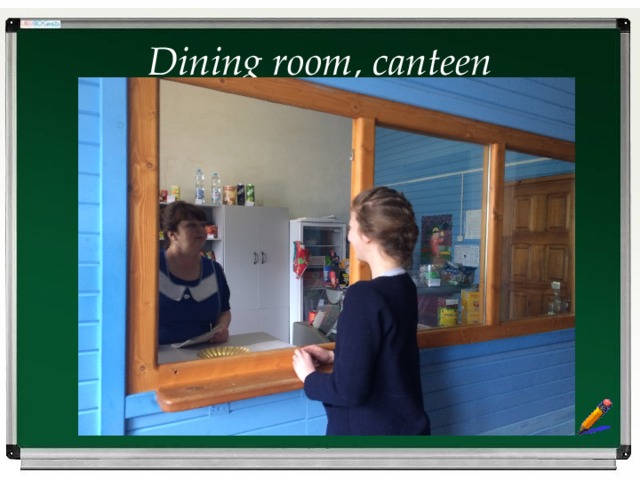
Dining room, canteen

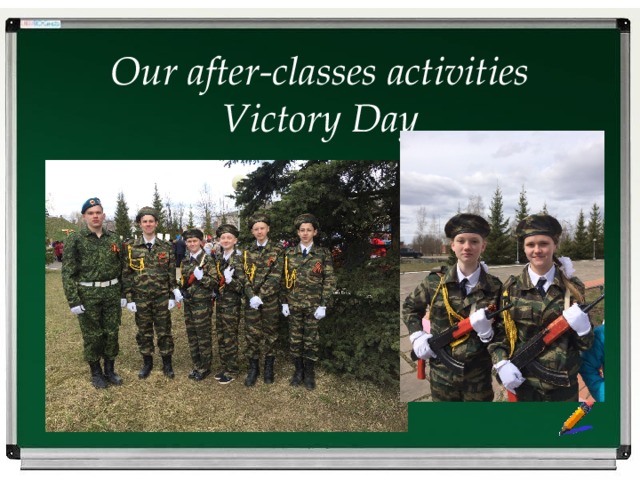
Our after-classes activities Victory Day
School is for health,
School is for wealth,
School is the best time of all!
School is for loses,
School is for crosses,
School is our life rock-n-roll!
We are looking forward
To catch the bird of luck.
But sometimes we must to say
Our school life is just yuck!
Разработка экскурсии по школе для иностранных студентов на английском языке
Экскурсия по школе для иностранных студентов на английском языке
Guides: Hello! Welcome to Gymnasium ( number ) which specializes in Russian and foreign languages.
The standard of education in our school is very high. We are proud of our graduates. Our graduates live and work in Russia and abroad. They are teachers and doctors, writers and scientists, workers and officers. There are many famous people among our graduates.
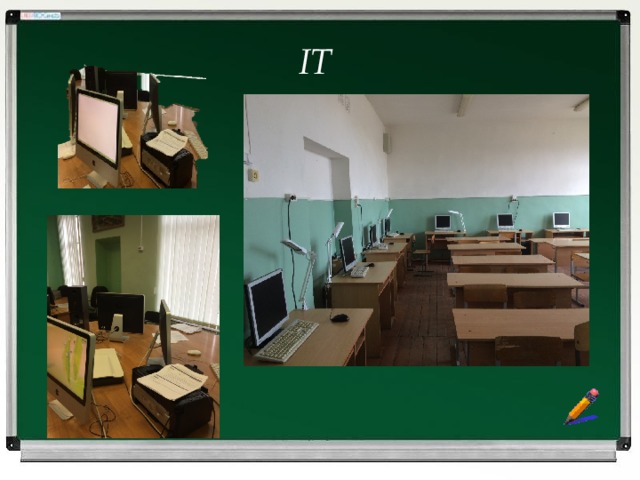
We are going to start our excursion around the school from the Media center, where you can get access to the internet and study or work on a computer. Over there you can see a stage where we give performances related to different events. We act in various plays, sing songs, recite poetry, dance, and participate in academic competitions.
The next room is the Biology classroom. There is also a laboratory where we keep all the necessary equipment for science projects and laboratory works.
Let’s go to the next classroom, where we study Maths. Here you can see different models of geometric figures and find Algebra and Geometry textbooks.
The History Classroom
Hello! We are glad to welcome you here, in our History classroom.
You know that those who don’t remember their history have no future. We carefully collect archaeological finds, so here you can see some results of our work. Our historic exhibition displays some part of the Russian izba. Although most Russians now live in modern flats, every Russian still knows what an izba is. Izba is a traditional log hut and the main dwelling type for Russian peasants. It’s impossible to imagine the izba without a stove. The very name of “izba” comes from the stove: in early Russian “izba” meant “the one being heated”. Stoves made of brick or clay were placed on a separate base, so that the house wouldn’t lean to its side. Inside the stove base, dishes and cookware were stored. An old Russian stove had no cooking range on top – it was a heating device that doubled as an oven. It was fired only once a day in the morning and that worked as a heat capacitor for the rest of the day. In the evening, the stove was still comfortably warm, so its top was used as the coziest sleeping place in the izba.
Here you can also see a poker. It is a long metal stick for moving the coal or wood in a fire so that it burns better.
This is an oven fork for putting dishes into the oven and taking them out.
By the way, Russian stove was used for different needs, from heating and cooking food to sleeping on it and washing it and also for washing, warming up the samovar, drying mushrooms and berries.
This is a washboard – a tool used for handwashing clothes. It appeared at the beginning of the 19 th century.
Look at the yoke. It is a frame fitting over the neck and shoulders of a person, used for carrying pails or baskets.
This is an old iron. A hundred years ago irons were made of solid metal. They were set to warm (usually on an open fire) and then used to press clothes.
That’s all I’ve got to say. Thank you very much for listening so attentively.
Guides: Now let’s go to classroom ( number ) – the Russian language classroom. If you are interested in anything about our language you can ask about it here.
The center of German culture
Hello! We are glad to welcome you here, in the center of German culture.
You know that our school is a language immersion one, where foreign languages, foreign culture and foreign values predominate. Each student learns two foreign languages. Everybody studies English and should choose the other one from German, Italian and French. In this center we learn the German language. Our teacher encourages us to immerse ourselves into the German culture and national traditions. In our lessons we often read German fiction and the latest newspapers and magazines and exchange e-mails with our German friends.
As you can see, the center is well and fully-equipped for learning the language. We can travel around the country with the help of German maps. Besides, we can get acquainted with the counties’ sights. In class there is always a relaxed, friendly and welcoming atmosphere, so we learn new words, watch German films, listen to German music and sing German songs ourselves with great pleasure. Also we do various projects and take part in academic competitions, getting good results. So we hope we achieve significant progress in the language.
The center of British and American culture
Hello! We are glad to welcome you here, in the center of British and American culture.
It is common knowledge that English is an international language. So in this center our students improve their linguistic and communicative competence and advance their knowledge about British and American culture. Our teachers help us not only learn the language profoundly, but also conduct research, project and volunteer activities in this field, and take part in various students’ exchange programmes.
This center is also a resource one. If you look around, you will see much fiction and poetry, newspapers and magazines, video in English and even additional material on English writing, speaking, grammar and phonetics.
British center is a leisure center. Here our students often participate in poetry readings, regional geography quizzes, foreign song’s competitions, they draw wall newspapers, study foreign literature, American and British history, do projects on different fascinating topics, write e-mails to their foreign friends and just relax.
In a word, if you want to enhance your knowledge of English and just enjoy your time with friends, come here as often as possible.
The center of Chinese culture
Hello! We are glad to welcome you here, in our center of Chinese culture.
In our school Chinese is an optional subject. It is not compulsory for the students to attend tutorials in Chinese. Despite this fact every year many students want to learn this difficult language.
In 2010 our school started cooperating with the Jinan School of Foreign Languages. Since then, our Chinese friends and we have been learning Russian and Chinese, the culture of our countries and traditions through correspondence between teachers and schoolchildren, on-line conferences and annual exchange visits to China. One of our teachers has been working in Jinan for 5 years. A few years ago a Chinese teacher (a native speaker) worked in our school for 2 years. She did her best to cultivate love for the Chinese language in our students.
Here you can see big posters that symbolize our friendly connection between the two cities. Now look at these photos. In them our learners and teachers are trying to share and experience the Chinese culture.
The center is quite well-equipped. As you can see there are posters with the most important grammatical rules of the Chinese language. Also here we have a small but useful library. It provides our students with contemporary literature for educational and leisure purposes.
In a word, our students learn Chinese hieroglyphics with great pleasure. We hope that you’ll want to try it too.
The Museum of Fighting Glory
Hello! We are glad to welcome you here, in the Museum of Fighting Glory.
The museum was founded on May 7, 1979 in our school.
As you probably know, Nizhny Novgorod land is rich in revolutionary, fighting and labor events. Our city took part in the defense of our homeland during the Second World War.
When the Great Patriotic War started in 1941, our students’ grandfathers and great-grandfathers went to fight for their Motherland. Many of them died. Here you can see an exhibition which displays their letters from the front line, bullet and shell casings, helmets, photos of the war years and official papers of our soldiers. There are also some wartime clothes, for example a soldier’s cloak and coat which helped our grandfathers to keep warm.
In 1942 in our school the 35 th Tank Brigade was formed. It fought its way to Berlin and received a significant number of awards.
We are very proud of our defenders and we are sure to keep them in our memory while alive.
The center of Russian culture
Hello! We are glad to welcome you here, in the center of Russian culture.
Every year many school students from different countries come to our city. The center tries to preserve Russian culture for the enjoyment of future generations. It helps to promote the Russian language and culture worldwide and develop and maintain positive relations with other countries through cooperation with partner schools abroad, online conferences and face-to-face meetings. Besides our center organizes exhibitions devoted to Russian culture and traditions.
The center hosts several exciting events throughout the year including for example literary readings. We often read extracts from Russian classical literature together with our foreign friends.
The Russian cultural center implements various projects. The most famous ones are «Nizhny Novgorod Land”, “Literary Nizhny”, “My fate in the Russian history” and what not. While doing projects, our students work with archive records, meet well-known people and thus broaden their knowledge of the mother tongue. So, it’s easier for us to share the necessary information with our guests. We are proud of our national traditions and always ready to help our guests to get to know us a bit better.
The center of Italian culture
Hello! We are glad to welcome you here, in the center of Italian culture.
As you probably know, the Italian language is one of compulsory languages in our school. So every year many students choose to learn Italian. In this center the students study the language and get familiar with the Italian culture.
Our school participates in student exchange programmes. Every year our students visit Italy. Last time they went to your country in autumn and spent there two weeks. They studied the language, went sightseeing, communicated with native speakers and as a result greatly improved their knowledge. If you look at this wall, you’ll see a few posters with our international photos. As you can see, all of them show our young travelers in Italy and in Russia. Look at this picture – here is our gymnasium head teacher ( name ). And look at these beautiful plates – they are souvenirs from Sicily.
By the way, Russian students are interested not only in the Italian language, but also in the Italian culture. Have a look at this poster. Our students collected some information about the connoisseur of literature and outstanding Italian poet – Francesco Petrarca. We really enjoy and value your classical literature and poetry.
So, now you see that the relationship between Italian and Russian students is very friendly. This is exciting that we can visit each other despite the unstable situation in the modern world.
There is an international project between our countries called «Dissemination of the Italian language in Russia (P.R.I.A)». On this information poster you can read some details concerning the project. Our gymnasium has been a member of this project since 2007, so many students have already got a great international experience. And I hope, we’ll continue our friendship.
Thank you very much for listening so attentively. Our teacher of Italian – ( name ) – can give you any additional information you need.
Guides: At the end of our excursion we want to say that we are very proud of our school. Many talented and creative teachers and students work and study here. Every year our students become the winners of different academic competitions and enter the most prestigious educational institutions.