
Тема «Образование в Великобритании» (Education in Great Britain)
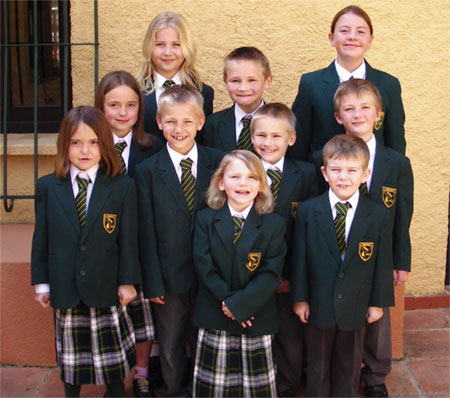
Education in Britain is compulsory and free for all children.
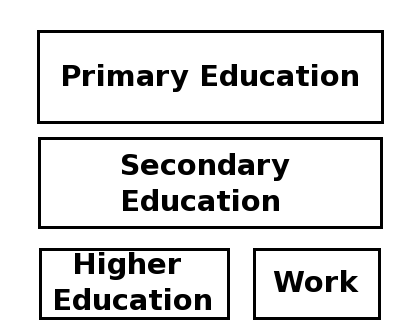
Primary education begins at the age of 5 in England, Wales and Scotland, and 4 in Northern Ireland. It includes three age ranges: nursery for children under 5 years, infants from 5 to 7, and juniors from 7 to 11 years old. In nursery schools babies don’t have real classes, they learn some elementary things such as numbers, colours and letters. Besides, they play, have lunch and sleep there. Children usually start their school education in an infant school and move to a junior school at the age of 7.
Compulsory secondary education begins when children are 11 or 12 and lasts for 5 years: one form to each year. Secondary schools are generally much larger than primary ones. Pupils in England and Wales begin studying a range of subjects stipulated under the National Curriculum. Religious education is available in all schools, although parents have the right to withdraw their children from such classes.
About 5 per cent of schoolchildren attend fee-paying private or public schools. Most of these schools are boarding ones, where children live as well as study. The most famous British public schools are Eton, Harrow and Winchester.
The large majority of British schools teach both boys and girls together. But grammar schools, which give state secondary education of a very high standard, teach boys and girls separately.
The school year in England and Wales starts in September and ends in July. In Scotland it runs from August to June and in Northern Ireland from September to June and has three terms. At 7 and 11 years old, and then at 14 and 16 at secondary school, pupils take examinations in the core subjects (English, Mathematics and Science).
The main school examination, the General Certificate of secondary education (GCSE) examination is taken at the age of 16. If pupils are successful, they can make their choice: they may either go to a Further Education College or a Polytechnic or they may continue their education in the sixth form. Those who stay at school after GCSE, study for 2 more years for «A’ (Advanced) Level Exams in two or three subjects which is necessary to enter one of British universities. Universities usually select students basing on their A-level results and an interview. After three years of study a university graduate gets the Degree of a Bachelor of Arts, Science or Engineering. Many students then continue their studies for a Master’s Degree and then a Doctor’s Degree (PhD).
Перевод
Британское образование обязательно и бесплатно для всех детей.
Начальное образование начинается в 5 лет в Англии, Уэльсе и Шотландии, и в 4 года – в Северной Ирландии. Оно включает три возрастных диапазона: ясли для детей до 5 лет, начальная школа от 5 до 7 лет и младшая школа для детей 7-11 лет. В детских садах у малышей еще нет настоящих уроков, их обучают лишь некоторым элементарным вещам: цифрам, цветам и буквам. Кроме того, они играют, обедают и спят. Дети обычно начинают свое образование в начальной школе и далее в младшей школе в возрасте 7 лет.
Обязательное среднее образование начинается в возрасте 11 или 12 лет и продолжается в течение 5 лет: по одному классу на каждый год. Средние школы, как правило, намного больше начальных. Ученики в Англии и Уэльсе приступают к изучению комплекса предметов, подразумеваемых Национальной программой. Религиозное образование также присутствует во всех школах, хотя родители имеют право отказаться от этих занятий.
Около 5% школьников посещают платные частные школы. Большая часть таких школ является интернатами, то есть дети в них и живут, и обучаются. Самыми знаменитыми британскими частными школами считаются Итон, Хэрроу и Винчестер.
Большинство британских школ обучает мальчиков и девочек вместе. Однако «грамматические» школы, которые дают государственное среднее образование на очень высоком уровне, занимаются с мальчиками и девочками отдельно.
Учебный год в Англии и Уэльсе начинается в сентябре и заканчивается в июле. В Шотландии он длится с августа по июнь, а в Северной Ирландии – с сентября по июнь и состоит из трех семестров. В возрасте 7 и 11 лет, а потом 14 и 16 лет в средних школах дети сдают экзамены по основным предметам (английский, математика и естествознание).
Главный школьный экзамен на сертификат о среднем образовании (GCSE) проводится в возрасте 16 лет. Если ученики сдают его успешно, у них есть выбор: они могут либо поступить в Колледж дополнительного образования или в политехническую школу, либо продолжить свое образование в шестом классе. Те, кто остается в школе после GCSE, учатся еще 2 года для того, чтобы сдать экзамены продвинутого уровня «А» по двум-трем предметам, что является необходимым условием для поступления в британский университет. Университеты обычно отбирают студентов по результатам «А» экзаменов и собеседования. Через 3 года обучения выпускник университета получает Степень бакалавра гуманитарных, естественных или технических наук. Многие студенты далее продолжают обучение для получения Степени магистра и после Степени доктора.
Добрый вечер! Помогите с переводом по анг. Вариант 3
Вариант 3
1. Прочтите текст и ответьте на следующие вопросы:
1. At what age do children go to school in Great Britain
2. What does primary school include?
THE EDUCATIONAL SYSTEM IN GREAT BRITAIN
1. Public education in Great Britain consists of Primary, Secondary and Further Education. Primary and Secondary education is compulsory for all children. Further education is voluntary.
2. All children in Great Britain go to school when they are five. They leave school at the age of fifteen but many boys and girls stay at school until they are sixteen-seventeen and go to further education or to university.
3. The primary school includes nursery school (2-5), infant school] (5-7) and junior school (7-11). The full secondary school age ranges from] 11 to 18. Children go to a grammar school, or to a secondary modern school, or to a secondary technical school, or to a comprehensive school.
4. The academic year begins after summer holidays and has three terms with the interval between them. Day-schools work on Mondays to Fridays only, from 9 a.m. to 4 p.m.
5. Before lessons start, the teacher and all the boys and girls meet for prayers. Then they go to the classroom for the first lesson. At one о ‘с1оck children have a break for lunch. The break lasts about an hour. After lunch there is still time to go out and play.
2. Переведите в письменной форме абзацы 1, 2, 4.
3. Выберите нужную форму глагола tobeи переведите предложения на русский язык:
1. They (are, were, will be) first-year students now.
2. She (is, was, will be) a professor at Oxford two years ago.
3. I (am, was, will be) an engineer in five years.
4. Напишите предложения в вопросительной, а затем в отрицательной форме и переведите их на русский язык:
1. Children have a break for lunch in the morning.
2. We hada difficult test yesterday.
3. He will have an interesting job next year.
5. Поставьте глаголы, данные в скобках, в Past Indefinite Tense (прошедшее неопределенное время) :
1. My brother (to get) a grant for further education.
2. The teacher (to ask) many questions at the lesson.
3. He (to go) to primary school at the age of five.
6. Составьте три предложения, используя слова, данные в колон¬ках, и переведите их на русский язык:
There is many institutes in our country
well-equipped
language
laboratories
There are a good library at our university
many students
7. Заполните пропуски предлогами по смыслу:
1. There are 42 universities … Great Britain.
2. About 5% of the population in Great Britain go … public schools.
3. Last year my brother left school and got a job … a bank.
7. Заполните пропуски предлогами по смыслу:
1. Есть 42 университета … Великобритания.
2. Приблизительно 5 % населения в Великобритании идут … государственные школы.
3. В прошлом году мой брат покинул школу и получил работу … банк.
At what age do children go to schoo
At what age do children go to school in Britain?
Children in Britain must attend school from the age of 5 (4 in Northern Ireland) until they are 16. Before the start of formal schooling, many children attend nursery schools or nursery classes attached to primary schools. In addition, some parents elect to send their children to private (fee-paying) nursery schools or kindergartens. In England and Wales, many primary schools also operate an early admission policy where they admit children under 5 into what are called reception classes.
Children first attend the infants’ school or department. At 7 they move to the junior school and the usual age for transfer from junior to secondary school is 11 (12 in Scotland). In some areas, however, ‘first’ schools take pupils aged 5 to 8, 9 or 10, and pupils within the 8 to 14 age range go to ‘middle’ schools.
TOP
65 What are the different types of secondary school?
Over 85 per cent of secondary school pupils go to comprehensive schools. These take children of all abilities, and provide a wide range of secondary education for all or most of the children in a district from the age of 11 to 16 or 18. There are also other types of secondary school. Grammar schools offer a mainly academic education for the 11 to 18-year age group. Children enter grammar schools on the basis of their abilities, first sitting the ‘11’ plus or entrance examination. Grammar schools cater for four per cent of children in secondary education. A small minority of children attend secondary modern schools (around four per cent). These schools provide a more general and technical education for children aged 11-16.
City Technology Colleges (CTCs) aim to give boys and girls a broad secondary education with a strong technological and business slant.
They are non-fee-paying independent schools, set up by the Government with the help of business sponsors who finance a large proportion of the initial capital costs and develop links with the schools. There are now 15 such colleges in operation in England and Wales.
Specialist schools, which only operate in England, give pupils a broad secondary education with a strong emphasis on technology, languages, arts or sports. There are over 250 specialist schools. They charge no fees and any secondary school can apply for specialist school status.
TOP
66 Why are ÔpublicÕ schools so called?
The independent school sector is separate from the state educational system,and caters for some seven per cent of all schoolchildren in England and four per cent in Scotland.
Parents of pupils attending independent schools pay for their education, and in some cases fees can amount to several thousand pounds a year. Some pupils gain scholarships and their expenses are covered by the schools.
About 250 of the larger independent shools are known for historical reasons as public schools. Eton, which was founded in 1440, is said to have been the first grammar schools to be called a ‘public shool’ because scholars could come to it from any part of England and not, as was generally the case, just from the immediate neighbourhood.
Originally, many public schools stressed a classical education, character training and sports, but the curriculum is now closely allied to state education.
In Northern Ireland there are a few independent fee paying schools catering for a very small proportion of the school population; they do not receive any support from public funds.
Schools in Scotland supported by public funds are also called ‘public schools’ but they are not fee-paying, independent schools.
TOP
67 Which is the oldest university in Britain?
The University of Oxford was the first university to be established in Britain. Dating from the 12th century, it is organised as a federation of colleges which are governed by their own teaching staff known as ‘Fellows’. The oldest college, University College, was founded in 1249. Other notable colleges include All Souls (founded in 1438), Christ Church (founded in 1546 by Cardinal Wolsey), the college chapel of which is also Oxford Cathedral, and Lady Margaret Hall (founded in 1878), which was the first women’s college. Today Oxford University is made up of 35 separate colleges, of which two are for women students only, and the rest take both men and women.
In 1208, scholars running away from riots in Oxford set up the first academic community in Cambridge. The University is also organised as a federation of colleges; the oldest, Peterhouse, dates from 1284. The largest college, Trinity, was founded by King Henry VIII in 1546.
Scotland also boasts a number of long- established universities. By the end of the Middle Ages Scotland had four universities at Edinburgh (founded 1583), Glasgow (founded 1450), Aberdeen (founded 1494) and St Andrew’s (founded 1411) compared to England’s two!
The University of Wales was founded in 1893. It consists of six colleges, the oldest one being St David’s University College in Lampeter, founded in 1822