
Тема «Образование в Великобритании» (Education in Great Britain)
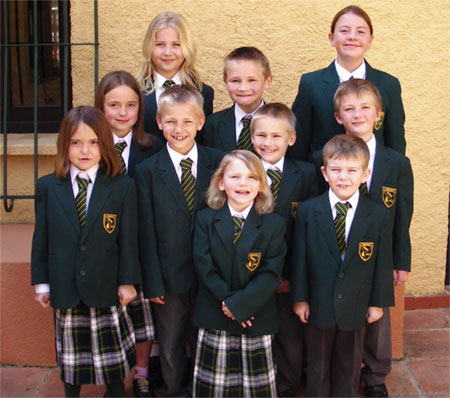
Education in Britain is compulsory and free for all children.
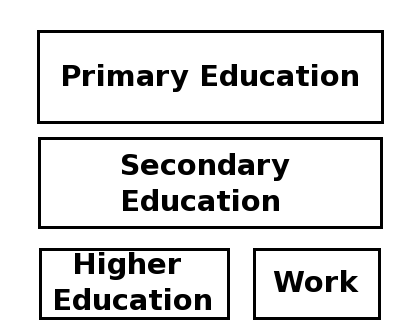
Primary education begins at the age of 5 in England, Wales and Scotland, and 4 in Northern Ireland. It includes three age ranges: nursery for children under 5 years, infants from 5 to 7, and juniors from 7 to 11 years old. In nursery schools babies don’t have real classes, they learn some elementary things such as numbers, colours and letters. Besides, they play, have lunch and sleep there. Children usually start their school education in an infant school and move to a junior school at the age of 7.
Compulsory secondary education begins when children are 11 or 12 and lasts for 5 years: one form to each year. Secondary schools are generally much larger than primary ones. Pupils in England and Wales begin studying a range of subjects stipulated under the National Curriculum. Religious education is available in all schools, although parents have the right to withdraw their children from such classes.
About 5 per cent of schoolchildren attend fee-paying private or public schools. Most of these schools are boarding ones, where children live as well as study. The most famous British public schools are Eton, Harrow and Winchester.
The large majority of British schools teach both boys and girls together. But grammar schools, which give state secondary education of a very high standard, teach boys and girls separately.
The school year in England and Wales starts in September and ends in July. In Scotland it runs from August to June and in Northern Ireland from September to June and has three terms. At 7 and 11 years old, and then at 14 and 16 at secondary school, pupils take examinations in the core subjects (English, Mathematics and Science).
The main school examination, the General Certificate of secondary education (GCSE) examination is taken at the age of 16. If pupils are successful, they can make their choice: they may either go to a Further Education College or a Polytechnic or they may continue their education in the sixth form. Those who stay at school after GCSE, study for 2 more years for «A’ (Advanced) Level Exams in two or three subjects which is necessary to enter one of British universities. Universities usually select students basing on their A-level results and an interview. After three years of study a university graduate gets the Degree of a Bachelor of Arts, Science or Engineering. Many students then continue their studies for a Master’s Degree and then a Doctor’s Degree (PhD).
Перевод
Британское образование обязательно и бесплатно для всех детей.
Начальное образование начинается в 5 лет в Англии, Уэльсе и Шотландии, и в 4 года – в Северной Ирландии. Оно включает три возрастных диапазона: ясли для детей до 5 лет, начальная школа от 5 до 7 лет и младшая школа для детей 7-11 лет. В детских садах у малышей еще нет настоящих уроков, их обучают лишь некоторым элементарным вещам: цифрам, цветам и буквам. Кроме того, они играют, обедают и спят. Дети обычно начинают свое образование в начальной школе и далее в младшей школе в возрасте 7 лет.
Обязательное среднее образование начинается в возрасте 11 или 12 лет и продолжается в течение 5 лет: по одному классу на каждый год. Средние школы, как правило, намного больше начальных. Ученики в Англии и Уэльсе приступают к изучению комплекса предметов, подразумеваемых Национальной программой. Религиозное образование также присутствует во всех школах, хотя родители имеют право отказаться от этих занятий.
Около 5% школьников посещают платные частные школы. Большая часть таких школ является интернатами, то есть дети в них и живут, и обучаются. Самыми знаменитыми британскими частными школами считаются Итон, Хэрроу и Винчестер.
Большинство британских школ обучает мальчиков и девочек вместе. Однако «грамматические» школы, которые дают государственное среднее образование на очень высоком уровне, занимаются с мальчиками и девочками отдельно.
Учебный год в Англии и Уэльсе начинается в сентябре и заканчивается в июле. В Шотландии он длится с августа по июнь, а в Северной Ирландии – с сентября по июнь и состоит из трех семестров. В возрасте 7 и 11 лет, а потом 14 и 16 лет в средних школах дети сдают экзамены по основным предметам (английский, математика и естествознание).
Главный школьный экзамен на сертификат о среднем образовании (GCSE) проводится в возрасте 16 лет. Если ученики сдают его успешно, у них есть выбор: они могут либо поступить в Колледж дополнительного образования или в политехническую школу, либо продолжить свое образование в шестом классе. Те, кто остается в школе после GCSE, учатся еще 2 года для того, чтобы сдать экзамены продвинутого уровня «А» по двум-трем предметам, что является необходимым условием для поступления в британский университет. Университеты обычно отбирают студентов по результатам «А» экзаменов и собеседования. Через 3 года обучения выпускник университета получает Степень бакалавра гуманитарных, естественных или технических наук. Многие студенты далее продолжают обучение для получения Степени магистра и после Степени доктора.
The System of Education in Great Br
The System of Education in Great Britain is class divided. There are state and private schools in England. State schools are divided into infant schools, junior schools and secondary schools. British boys and girls begin to go to school at the age of 5. At the age of 7 they go to junior school. They study History, English, Geography, Mаths, Sport, Art, Music, Computing, and Cooking. They study there for four years. Then they take the exams and enter the secondary schools.
There are 3 main types of secondary schools: grammar schools, modern schools and comprehensive schools. English schoolchildren go to a secondary school from 11 till 16 years. They don’t go to school on Saturdays and Sundays. If you want to go to the University, you have to go to grammar school. Modern schools are not popular today. Most children (about 90 %) go to comprehensive schools.
There are also private schools in England. They are fee paying and expensive. They are for elite people. 10% of the population attends the best-known private schools such as Eton, Harrow, Winchester, and some others. It is possible to enter the best English Universities after leaving such schools.
England, Northern Ireland, Scotland and Wales have separate systems of education.
Universal state education in England and Wales was introduced for primary level in 1870 and secondary level in 1900. Education is mandatory from ages five to sixteen (15 if born in late July or August). The majority of children are educated in state-sector schools, only a small proportion of which select on the grounds of academic ability. Despite a fall in actual numbers, the proportion of children in England attending private schools has risen to over 7%. Just over half of students at the leading universities of Cambridge and Oxford had attended state schools. State schools which are allowed to select pupils according to intelligence and academic ability can achieve comparable results to the most selective private schools: out of the top ten performing schools in terms of GCSE results in 2006 two were state-run grammar schools. England has some of the top universities in the world; Cambridge, Oxford, and London are ranked among the top 20 in the 2007 World University Rankings. There are fears, however, that a decline in the number of English students studying a foreign language will have a negative effect on business, which has led to calls for languages to be given greater priority.
Scotland first legislated for compulsory education in 1496. The proportion of children in Scotland attending private schools is just over 4%, although it has been rising slowly in recent years. Scottish students who attend Scottish universities pay neither tuition fees nor endowments as the fees were abolished in 2001 and the endowment was abolished in 2008.
Education in Northern Ireland is the responsibility of the Minister for Education, although responsibility at a local level is administered by five Education and Library Boards, covering different geographical areas. The ‘Council for the Curriculum, Examinations & Assessment (CCEA) is the body responsible for advising the government on what should be taught in Northern Ireland’s schools, monitoring standards and awarding qualifications.
The National Assembly for Wales has responsibility for education in Wales. A significant number of Welsh students are taught either wholly or largely in the Welsh language; lessons in Welsh are compulsory for all until the age of 16. There are plans to increase the provision of Welsh Medium schools as part of the policy of having a fully bi-lingual Wales.
The Program for International Student Assessment ranked the UK 14th in science, which was higher than the OECD average.
Vocabulary on the text
16. The educational system in the UK (Образовательная система в Великобритании)
1. The educational system of G.B. is extreamely complex and bewildering. (Образовательная система Великобритании очень сложна и разнообразна).
2. It is very difficult to generalise about particular types of schools as schools differ from one to the other. (Очень не просто классифицировать школы по их специфическим чертам, поскольку школы отличаются друг от друга).
3. The departament of education and science is responsible for national educational policy, but it doesn’t employe teacher or prescribe corricular or text books. (Министерство образования и науки ответственно за образовательную национальную политику, но оно не нанимает учителей и не предписывает программу или учебники).
4. Each school has it’s own board of governers consisting of teachers, parents, local politicians, members of local community, businessmen and sometimes pupils. (Каждая школа имеет свое собственное руководство, состоящее из учителей, родителей, местных политиков, членов местного управления, бизнесменов и, иногда, учеников).
5. According to the law only one subject is compulsory. Such as religious instruction. (Согласно закону только один предмет обязательный. Такой как религиозное обучение).
6. Schooling for children is compulsory from 5 to 16, though some provision is made for children under 5 and some pupils remain at school after 16 to prepare for higher education. (Школа для детей обязательна с 5 до 16 лет, хотя некоторые постановления существуют для детей младше 5 лет, чтобы они могли ходить в школу и некоторые ученики остаются в школе после 16 лет, чтобы подготовиться к высшему образованию).
7. The state school system is usually devided into 2 stages (secondary and primary). (Государственная школьная система обычно делится на 2 части: начальная школа и общеобразовательная).
8. The majority of primary schools are mixed. (Начальные школы между собой различаются).
9. They are subdevided into infant schools(ages 5 to 7),and junior schools(ages 7 to11). (Они делятся на младшие школы (возраст детей от 5 до 7 лет) и сосбтвенно начальные школы (возраст детей от 7 до 11 лет)).
10. In junior schools pupils were often placed in A,B,C or D-streams, according to their abilities. (В начальной школе ученики часто делятся по разным направлениям: A, B, C или D, в соответствии с их возможностями).
11. Under the pressue of progressive parents and teachers the 11+ examination has now been abolished in most parts of the country. (Под давлением прогрессивных родителей и учителей экзамен 11+ сейчас отменен во многих частях страны).
12. There are some types of schools in G.B.Grammar schools provided an academical cause for selected pupils from the age of 11 to 18. (В великобритании существует несколько типов школ. Грамматические школы преследуют академическую цель для отобранных учеников в возрасте от 11 до 18 лет).
13. Only those children who have the best results are admitted to these schools. (Только те дети, которые имеют наилучшие результаты допускаются в эти школы).
14. They give pupils a high level of academic education wich can lead to the university. (Они дают ученикам высокий уровень академического образования, который позволяет пойти учиться в университет).
15. Technical Schools offer a general education with a technical bias and serve those pupils who are more mechanically minded. (Технические школы предлагают общее образование с техническим наклоном и обслуживает тех учеников, которые обладают знаниями механики и техники ).
16. The corricular includes more science and mathematics. (Учебная программа в таких школах включает в себя больше науки и математики).
17. Secondary modern schools were formed to provide a non-academic education for children of lesser attainment. (Современная общеобразовательная школа была создана, чтобы дать неакадемическое образование детям с меньшим уровнем знаний и навыков).
18. The corricular includes more practical subjects. (Учебная программа включает больше практических предметов).
19. The comprehensive schools bring about a general improvement in the system of secondary education. (Комплексные школы приносят общее улучшение в систему общего образования).