
TEXT 4 FINANCE AND FINANCIAL SYSTEM
Exercise 4.1 Study the vocabulary:
| 1) Public finance | 1) державні фінанси |
| 2) provision | 2) постачання, забезпечення |
| 3) monetary relations | 3) грошові відносини |
| 4) distribution | 4) розподіл |
| 5) turnover | 5) обіг, оборотність |
| 6) economic entity | 6) економічний суб’єкт |
| 7) network of institutions | 7) мережа закладів (організацій) |
| 8) household | 8) домашнє господарство |
| 9) unit of government | 9) державна організація. |
| 10) funds | 10) фонди, засоби, гроші |
| 11) surplus | 11) надлишок, залишок |
| 12) saver | 12) вкладник |
| 13) borrower | 13) позичальник |
| 14) intermediary | 14) посередник |
| 15) thrift institution | 15) ощадний заклад |
| 16) insurаnce company | 16) страхова компанія |
| 17) pension fund | 17) пенсійний фонд |
| 18) mutual fund | 18) взаємний фонд |
| 19) community | 19) співтовариство, група осіб, що об’єднані за певними ознаками; |
| 20) government authorities | 20) уряд, органи державної влади |
| 21) benefit | 21) вигода, користь, благо |
| 22) financial flows | 22) фінансові потоки |
| 23) encouragement | 23) підтримка, стимулювання, заохочення |
| 24) раrtiсular | 24) особливий, специфічний |
| 25) implementation | 25) виконання, здійснення |
| 26) social роlісу | 26) соціальна політика |
| 27) budget | 27) бюджет |
| 28) estimate | 28) оцінка, кошторис |
| 29) revenue(s) | 29) доходи (державні) |
| 30) fiscal year | 30) фінансовий рік |
| 31) expenditure | 31) витрати |
| 32) deficit | 32) нестача |
Exercise 4.2 Read and translate the text:
Finance is the provision of money at the time when it is needed. It is a system of monetary relations leading to formation, distribution and use of money in the process of its turnover between economic entities.
The financial system is the network of institutions through which firms, households and units of government get the funds they need and put surplus funds to work.
Savers and borrowers are connected by financial intermediaries including banks, thrift institutions, insurance companies, pension funds, mutual funds, and finance companies.
Finance in an economic system comprises two parts: public finance and finance of economic entities.
Public finance is the provision of money (by the community through taxes) to be spent by national and local government authorities on projects of national and local benefit. It is a collective term for the financial flows and also the financial institutions of the public sector.
Public finance has the following four functions:
a) the provision of essential services;
b) the encouragement or control of particular sectors of the economy;
c) the implementation of social policy in respect of social services;
d) the encouragement of the growth of the economy as a whole.
The major instrument of any financial system is the budget. In a market-oriented economy, the budget is the most important tool for achieving national priority and goals through the allocation and distribution of resources, and the maintenance of stable macroeconomic environment.
The budget is an estimate of national revenue and expenditure for the ensuing fiscal year. When expenditure exceeds the revenue the budget has a deficit.
In Ukraine, public finance is a sum of the budgets of all levels of subjects of the state, extra budgetary and reserve funds.
Exercise 4. 3Read the text and match the equivalents:
| 1. National revenue(s) | a) економіка, що орієнтована на ринок |
| 2. Borrower | b) фінансові потоки |
| 3. Market-oriented economy | c) державні прибутки |
| 4. Intermediary | d) страхова компанія |
| 5. Financial system | e) вкладник |
| 6. Saver | f) фінансова система |
| 7. Extrabudgetary and reserve funds | g) місцева вигода |
| 8. Insurance company | h) посередник |
| 9. Financial flows | i) позичальник |
| 10. Local benefit | j) позабюджетні та резервні фонди |
Exercise 4.4 Read the text and match word combinations from the text:
| 1. Economic | a) system |
| 2. Thrift | b) institutions |
| 3. Financial | c) entities |
| 4. Fiscal | d) benefit |
| 5. Insurance | e) services |
| 6. Pension | f) finance |
| 7. National | g) year |
| 8. Public | h) funds |
| 9. Local | i) revenue |
| 10. Essential | j) companies |
Exercise 4.5 Read the text and choose the right ending:
| 1. Finance is the provision of | a) the budget has a deficit. |
| 2. Finance is a system of | b) monetary relations leading to formation, distribution and use of money. |
| 3. The budget is the most important tool | c) national revenue and expenditure for the fiscal year. |
| 4. The budget is an estimate of | d) for achieving national priority and the maintenance of stable macroeconomic environment. |
| 5. When expenditure exceeds the revenue | e) money at the time when it is needed. |
Exercise 4.6 Read the text and choose whether the statements are true or false:
1. Finance is the provision of money at the time when it is needed.
2. Finance comprises four parts.
3. Finance in an economic system which consists of public finance and finance of economic entities.
4. Public finance has four functions.
5. The essence of finance is shown in its functions.
6. The major instrument of any financial system is taxation.
7. The budget is an estimate of national revenue and expenditure for the ensuing fiscal year.
8. In a market-oriented economy the taxation is the most important tool for achieving national priority.
9. Finance and money have identical substance.
10. When the revenue exceeds expenditure the budget has a deficit
Дата добавления: 2015-01-03 ; Просмотров: 713 ; Нарушение авторских прав?
Нам важно ваше мнение! Был ли полезен опубликованный материал? Да | Нет
FINANCE AND FINANCIAL SYSTEM
Finance is the provision of money at the time when it is needed. It is a system of monetary relations leading to formation, distribution and use of money in the process of its turnover between economic entities.
The financial system is the network of institutions through which firms, households and units of government get the funds they need and put surplus funds to work.
Savers and borrowers are connected by financial intermediaries including banks, thrift institutions, insurance companies, pension funds, mutual funds, and finance companies.
Finance in an economic system comprises two parts: public finance and finance of economic entities.
Public finance is the provision of money (by the community through taxes) to be spent by national and local government authorities on 1 projects of national and local benefit. It is a collective term for the financial flows and also the financial institutions of the public sector.
Public finance has the following four functions: a) the provision of essential services; b) the encouragement or control of particular sectors of the economy; c) the implementation of social policy in respect of social services, and d) the encouragement of the growth of economy as a whole.
The major instrument of any financial system is the budget. In a market-oriented economy, the budget is the most important tool for achieving national priorities and goals through the allocation and distribution of resources, and the maintenance of a stable macroeconomic environment.
The budget is an estimate of national revenue and expenditure for the ensuing fiscal year. When expenditure exceeds the revenue the budget has a deficit.
Revenue and expenditure forecasting is the most fundamental step in the process of budget preparation. Adequate planning of recurrent and capital expenditure depends critically on an accurate forecast of revenue availability. The determination of the expected overall deficit in the public sector and therefore the macroeconomic impact of fiscal policy requires accurate forecast of tax collection and expenditures.
DEMAND AND SUPPLY
Supply is the quantity of a good that sellers wish to sell at each price. Other things equal, when prices are high, the supplied quantity is high as well.
The market is in equilibrium when the price regulates the quantity supplied by producers and the quantity demanded by consumers. When prices are not so high as the equilibrium price, there is excess demand (shortage) raising the price. At prices above the equilibrium price, there is excess supply (surplus) reducing the price.
There are some factors influencing demand for a good, such as the prices of other goods, consumer incomes and some others.
An increase in the price of a substitute good (or a decrease in the price of a complement good) will at the same time raise the demanded quantity.
As consumer income is increased, demand for a normal good will also increase but demand for an inferior good will decrease. A normal good is a good for which demand increases when incomes rise. An inferior good is a good for which demand falls when incomes rise.
As to supply, some factors are assumed 3 as constant. Among them are technology, the input price, as well as degree of government regulation. An improvement in technology is as important for increasing the supplied quantity of a good as a reduction in input prices.
Government regulates demand and supply, imposing ceiling prices (maximum prices) and floor prices (minimum prices) and adding its own demand to the demand of the private sector.
INFLATION
Inflation is a steady rise in the average price and wage level. The rise in wages being high enough to raise costs of production, prices grow further resulting in a higher rate of inflation and, finally, in an inflationary spiral. Periods when inflation rates are very large are referred to as’ hyperinflation.
The causes of inflation are rather complicated, and there is a number of theories explaining them. Monetarists, such as Milton Friedman, say that inflation is caused by too rapid increase in money supply and the corresponding excess demand for goods.
Therefore, monetarists consider due government control of money supply to be able to restrict inflation rates. They also believe the high rate of unemployment to be likely to restrain claims for higher wages. People having jobs accept the wages they are being paid, the inflationary spiral being kept under control. This situation also accounts for rather slow increase in aggregate demand.
On the other hand, Keynesians, that is, economists following the theory of John M. Keynes, suppose inflation to be due to processes occurring in money circulation. They say that low inflation and unemployment rates can be ensured by adopting a tight incomes policy.
The costs of inflation depend on whether it was anticipated and on the extent to which the economy’s institutions allow complete inflation adjustment.
The longer inflation continues, the more the economy learns to live with it. Indexation is a means to reduce the costs of some inflation effects. Indexed wages or loans mean that the amount to be paid or repaid will rise with the price level. Indexation has already been introduced in countries that had to live with inflation rates of 30 or 40 percent for years. And the more countries adjust their economies to cope with inflation, the closer they come to hyperinflation. Indexation means that high rates of inflation are much more likely to continue and even to increase.
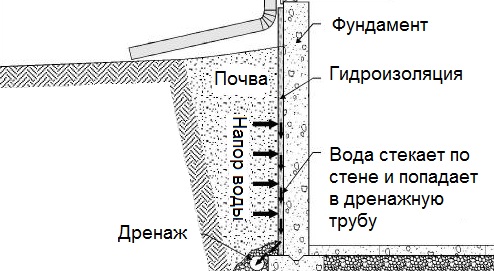
Общие условия выбора системы дренажа: Система дренажа выбирается в зависимости от характера защищаемого.
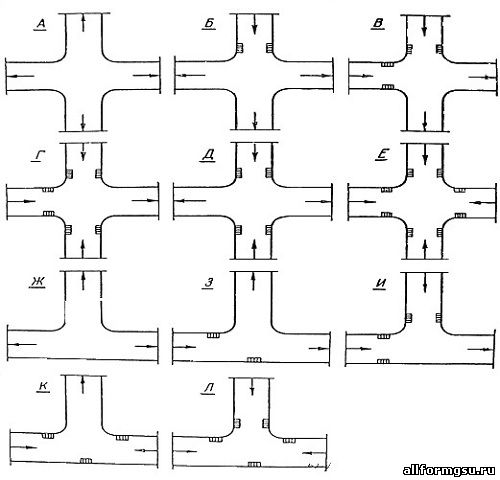
Организация стока поверхностных вод: Наибольшее количество влаги на земном шаре испаряется с поверхности морей и океанов (88‰).
FINANCE AND FINANCIAL SYSTEMFinance
FINANCE AND FINANCIAL SYSTEM
Finance is the provision of money at the time when it is needed. It is a system of monetary relations leading to formation, distribution and use of money in the process of its turnover between economic entities.
The financial system is the network of institutions through which firms, households and units of government get the funds they need and put sur¬plus funds to work.
Savers and borrowers are connected by financial intermediaries includ-ing banks, thrift institutions, insurance companies, pension funds, mutual funds, and finance companies.
Finance in an economic system comprises two parts: public finance and finance of economic entities.
Public finance is the provision of money (by the community) through taxes to be spent by national and local government authorities on projects of national and local benefit. It is a collective term for the financial flows and also the financial institutions of the public sector.
Public finance has the following four functions:
a) the provision of essential services;
b) the encouragement or control of particular sectors of the economy;
c) the implementation of social policy in respect of social services, and
d) the encouragement of the growth of economy as a whole.
The major instrument of any financial system is the budget. In a market-oriented economy, the budget is the most important tool for achieving national priorities and goals through the allocation and distribution c: resources, and the maintenance of a stable macroeconomic environment.
The budget is an estimate of national revenue and expenditure for the ensuing fiscal year. When expenditure exceeds the revenue the budget has a deficit.
Revenue and expenditure forecasting is the most fundamental step in the process of budget preparation. Adequate planning of recurrent and capital expenditure depends critically on an accurate forecast of revenue availability. The determination of the expected overall deficit in the public sector and therefore the macroeconomic impact of fiscal policy requires accurate forecast of tax collection and expenditures.
In Ukraine, public finance is a sum of budgets of all levels of subjects of the state, extra-budgetary and reserve funds.
Budget preparation at the state level involves a number of institutions. The Ministry of Finance (MoF) is the central coordinating institution in charge of compiling and presenting the budget. It has major inputs from ministries in various sectors of the economy and the state tax bodies.
ФИНАНСЫ И ФИНАНСОВАЯ СИСТЕМА
Финансы предоставление денег в то время, когда это необходимо. Это система денежных отношений, приводящих к образованию, распределению и использованию денежных средств в процессе его оборота между хозяйствующими субъектами.
Финансовая система сеть учреждений, через которые фирмы, домашние хозяйства и подразделения правительства получить необходимые им средства и поставить sur¬plus средства, чтобы работать.
вкладчиками и заемщиками связаны финансовыми посредниками банки, сберегательные учреждения, страховые компании, пенсионные фонды, взаимные фонды и финансовые компании-ки ВКЛЮЧАЕТ.
Финансы в экономической системе состоит из двух частей: государственные финансы и финансы хозяйствующие субъекты.
Государственные финансы является предоставление денег (сообществом) через систему налогов, которые будут потрачены национальных и местных органов власти по проектам на национальном и местном выгоды. Это собирательный термин для финансовых потоков, а также финансовых учреждений государственного сектора.
Государственные финансы имеет следующие четыре функции:
а) предоставление основных услуг;
б) поощрение или контроль отдельных секторов экономики;
в) реализация социальной политики в отношении социальных услуг, и
d) поощрение роста экономики в целом.
Главным инструментом любого финансовой системы является бюджет. В рыночной экономике, бюджет является наиболее важным инструментом для достижения национальных приоритетов и целей путем выделения и распределения C:. Ресурсов и поддержание стабильной макроэкономической среды
бюджет оценка национального дохода и расходов последующий финансовый год. Когда расходы превышают доходы бюджета имеет дефицит.
Доходы и прогнозирование расходов является наиболее важным шагом в процессе подготовки бюджета. Адекватное планирование текущих и капитальных расходов в решающей степени зависит от точного прогноза наличия доходов. Определение ожидаемого общего дефицита в государственном секторе и, следовательно, макроэкономическое воздействие налогово-бюджетной политики требует точного прогноза сбора налогов и расходов.
В Украине, государственные финансы является сумма бюджетов всех уровней субъектов государства, внебюджетные и резервные фонды.
Подготовка бюджета на государственном уровне включает в себя ряд учреждений. Министерство финансов (МФ) является центральным координирующим учреждением в части составления и представления бюджета. Он имеет основные вклады от министерств в различных секторах экономики и в налоговых органах государственной власти.