
«Принц и нищий» на английском языке с переводом
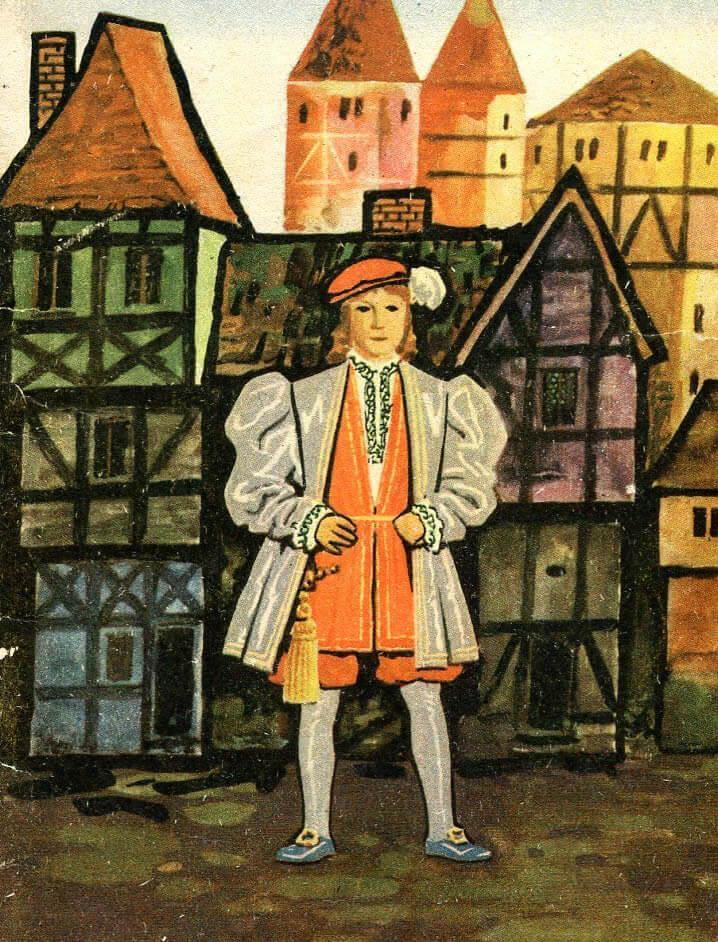
The Prince And The Pauper
Оглавление книги
| Chapter I | 1 |
| Chapter II | 3 |
| Chapter III | 9 |
| Chapter IV | 18 |
| Chapter V | 23 |
| Chapter VI | 33 |
| Chapter VII | 43 |
| Chapter VIII | 48 |
| Chapter IX | 52 |
| Chapter X | 56 |
| Chapter XI | 67 |
| Chapter XII | 73 |
| Chapter XIII | 87 |
| Chapter XIV | 93 |
| Chapter XV | 108 |
| Chapter XVI | 122 |
| Chapter XVII | 126 |
| Chapter XVIII | 140 |
| Chapter XIX | 151 |
| Chapter XX | 159 |
| Chapter XXI | 168 |
| Chapter XXII | 174 |
| Chapter XXIII | 181 |
| Chapter XXIV | 186 |
| Chapter XXV | 190 |
| Chapter XXVI | 200 |
| Chapter XXVII | 206 |
| Chapter XXVIII | 219 |
| Chapter XXIX | 224 |
| Chapter XXX | 227 |
| Chapter XXXI | 230 |
| Chapter XXXII | 238 |
| Chapter XXXIII | 253 |
Нажмите на незнакомое слово в тексте, чтобы увидеть варианты перевода.
В настройках Вы также можете изменять размер и выравнивание текста
The Prince And The Pauper: читать книгу в оригинале с параллельным переводом на русский язык
Кликните на ↺ появляющийся слева от параграфа при наведении, чтобы увидеть перевод
Книга загружается. Пожалуйста, подождите несколько секунд.
Chapter I
Для перехода между страницами книги вы можете использовать клавиши влево и вправо на клавиатуре.
Скачать книгу бесплатно в PDF, FB2, EPUb, DOC и TXT
Скачайте бесплатно электронную книгу (e-book) Марк Твен «Принц и нищий» на английском языке с параллельным переводом. Вы также можете распечатать текст книги. Для этого подойдут форматы PDF и DOC.
4 комментария
Время изменилось, но суть произведения не изменилась. А ведь чем выше поднялся, тем больнее падать.
Внук изучает английский. Возможность «прокачать» свой иностранный язык и параллельно прочитать новый увлекательный роман он оценил. Прибегал со школы и сразу за чтение.
Мне нравится читать эту книгу «Принц и нищий» со своими учениками на уроках английского. В ней столько поучительного и жизненного. В книге красивое описание Лондона. Нравы старой доброй Англии чувствуются через автора. Марк Твен писатель с большим художественным мышлением. Его слог меня восхищает.
Спасибо, крайне удобная навигация, переход между страницами, перевод слова одним кликом. Книгу скачал, вместе с переводом давно искал. Сайт в закладки.
The Prince and the Pauper / Принц и нищий. Книга для чтения на английском языке, стр. 1
Mark Twain / Марк Твен
The Prince and the Pauper / Принц и нищий. Книга для чтения на английском языке
To Those good-mannered and agreeable children Susie and Clara Clemens this book is affectionately inscribed by their father.
The quality of mercy … is twice bless’d;
It blesseth him that gives, and him that takes; ’Tis mightiest in the mightiest; it becomes The throned monarch better than his crown.
Комментарии и словарь Е. Г. Тигонен
I will set down a tale as it was told to me by one who had it of his father, which latter had it of HIS father, this last having in like manner had it of HIS father – and so on, back and still back, three hundred years and more, the fathers transmitting it to the sons and so preserving it. It may be history, it may be only a legend, a tradition. It may have happened, it may not have happened: but it COULD have happened. It may be that the wise and the learned believed it in the old days; it may be that only the unlearned and the simple loved it and credited it.
The Birth of the Prince and the Pauper
In the ancient city of London, on a certain autumn day in the second quarter of the sixteenth century, a boy was born to a poor family of the name of Canty [1], who did not want him. On the same day another English child was born to a rich family of the name of Tudor, who did want him. All England wanted him too. England had so longed for him, and hoped for him, and prayed God for him, that, now that he was really come, the people went nearly mad for joy. Mere acquaintances hugged and kissed each other and cried. Everybody took a holiday, and high and low, rich and poor, feasted and danced and sang, and got very mellow; and they kept this up for days and nights together. By day, London was a sight to see [2], with gay banners waving from every balcony and housetop, and splendid pageants marching along. By night, it was again a sight to see, with its great bonfires at every corner, and its troops of revellers making merry around them. There was no talk in all England but of the new baby, Edward Tudor, Prince of Wales [3], who lay lapped in silks and satins, unconscious of all this fuss, and not knowing that great lords and ladies were tending him and watching over him – and not caring, either. But there was no talk about the other baby, Tom Canty, lapped in his poor rags, except among the family of paupers whom he had just come to trouble with his presence.
Let us skip a number of years.
London was fifteen hundred years old, and was a great town – for that day. It had a hundred thousand inhabitants – some think double as many [4]. The streets were very narrow, and crooked, and dirty, especially in the part where Tom Canty lived, which was not far from London Bridge [5]. The houses were of wood, with the second story projecting over the first, and the third sticking its elbows out beyond the second. The higher the houses grew, the broader they grew. They were skeletons of strong criss-cross beams, with solid material between, coated with plaster. The beams were painted red or blue or black, according to the owner’s taste, and this gave the houses a very picturesque look. The windows were small, glazed with little diamond-shaped panes, and they opened outward, on hinges, like doors.
The house which Tom’s father lived in was up a foul little pocket called Offal Court, out of Pudding Lane. It was small, decayed, and rickety, but it was packed full of wretchedly poor families. Canty’s tribe occupied a room on the third floor. The mother and father had a sort of bedstead in the corner; but Tom, his grandmother, and his two sisters, Bet and Nan, were not restricted – they had all the floor to themselves, and might sleep where they chose. There were the remains of a blanket or two, and some bundles of ancient and dirty straw, but these could not rightly be called beds, for they were not organised; they were kicked into a general pile, mornings, and selections made from the mass at night, for service.
Bet and Nan were fifteen years old – twins. They were good-hearted girls, unclean, clothed in rags, and profoundly ignorant. Their mother was like them. But the father and the grandmother were a couple of fiends. They got drunk whenever they could; then they fought each other or anybody else who came in the way; they cursed and swore always, drunk or sober; John Canty was a thief, and his mother a beggar. They made beggars of the children, but failed to make thieves of them. Among, but not of, the dreadful rabble that inhabited the house, was a good old priest whom the King had turned out of house and home with a pension of a few farthings, and he used to get the children aside and teach them right ways secretly. Father Andrew also taught Tom a little Latin, and how to read and write; and would have done the same with the girls, but they were afraid of the jeers of their friends, who could not have endured such a queer accomplishment in them.
All Offal Court was just such another hive as Canty’s house. Drunkenness, riot and brawling were the order, there, every night and nearly all night long. Broken heads were as common as hunger in that place. Yet little Tom was not unhappy. He had a hard time of it, but did not know it. It was the sort of time that all the Offal Court boys had, therefore he supposed it was the correct and comfortable thing. When he came home empty-handed at night, he knew his father would curse him and thrash him first, and that when he was done the awful grandmother would do it all over again and improve on it; and that away in the night his starving mother would slip to him stealthily with any miserable scrap or crust she had been able to save for him by going hungry herself, notwithstanding she was often caught in that sort of treason and soundly beaten for it by her husband.
No, Tom’s life went along well enough, especially in summer. He only begged just enough to save himself, for the laws against mendicancy were stringent, and the penalties heavy; so he put in a good deal of his time listening to good Father Andrew’s charming old tales and legends about giants and fairies, dwarfs and genii, and enchanted castles, and gorgeous kings and princes. His head grew to be full of these wonderful things, and many a night as he lay in the dark on his scant and offensive straw, tired, hungry, and smarting from a thrashing, he unleashed his imagination and soon forgot his aches and pains in delicious picturings to himself of the charmed life of a petted prince in a regal palace. One desire came in time to haunt him day and night: it was to see a real prince, with his own eyes. He spoke of it once to some of his Offal Court comrades; but they jeered him and scoffed him so unmercifully that he was glad to keep his dream to himself after that.
He often read the priest’s old books and got him to explain and enlarge upon them. His dreamings and readings worked certain changes in him, by-and-by. His dream-people were so fine that he grew to lament his shabby clothing and his dirt, and to wish to be clean and better clad. He went on playing in the mud just the same, and enjoying it, too; but, instead of splashing around in the Thames solely for the fun of it, he began to find an added value in it because of the washings and cleansings it afforded.
Принц и нищий перевод с английского английский клуб
I will set down a tale (я изложу историю; to set down — класть) as it was told to me by one (как она была рассказана мне одним (человеком), who had it of his father (кто услышал ее от своего отца; to have — иметь, получать), which latter (которую последний /т.е. отец/) had it of his father (получил ее от своего отца), this last (этот последний) having in like manner had it of his father (в такой же манере получивший ее от своего отца) — and so on (и так далее), back and still back (назад и еще назад /в историю/), three hundred years and more (триста лет и больше), the fathers were transmitting it to the sons and so preserving it (отцы передавали ее сыновьям и таким образом сохраняли ее).
It may be history, it may be only legend, a tradition (это может быть история, это может быть лишь легенда, традиция). It may have happened, it may not have happened: but it could have happened (это могло произойти, могло не произойти: но это могло произойти; to happen — случаться). It may be that the wise and the learned believed it in the old days (может быть, что мудрые и ученые верили в нее в старые дни = давние времена); it may be that only the unlearned and the simple loved it and credited it (может быть, что только неученые и простые = простаки любили ее и верили в нее).
transmit [trænz`mıt], tradition [trə`dıS(ə)n], learned [`lə:nıd]
I will set down a tale as it was told to me by one who had it of his father, which latter had it of his father, this last having in like manner had it of his father — and so on, back and still back, three hundred years and more, the fathers transmitting it to the sons and so preserving it.
It may be history, it may be only legend, a tradition. It may have happened, it may not have happened: but it could have happened. It may be that the wise and the learned believed it in the old days; it may be that only the unlearned and the simple loved it and credited it.
CHAPTER I (Глава первая)
IN the ancient city of London (в древнем городе Лондоне), on a certain autumn day (в один осенний день; certain — некоторый, определенный) in the second quarter of the sixteenth century (во второй четверти шестнадцатого века), a boy was born to a poor family of the name of Canty (мальчик был рожден в бедной семье по фамилии Кэнти), who did not want him (которая не хотела его).
On the same day another English child (в тот же день другой английский ребенок) was born to a rich family of the name of Tudor (родился в богатой семье по фамилии Тюдор), who did want him (которая хотела его). All England wanted him too (вся Англия хотела его тоже). England had so longed for him (так хотела его; to long for smth — страстно желать чего-либо), and hoped for him (надеялась на него), and prayed God for him (и молила Бога за него), that (что), now that he was really come (сейчас, когда он действительно пришел), the people went nearly mad for joy (люди почти сошли с ума от радости; to go mad — сойти с ума).
Mere acquaintances (едва знакомые люди; acquaintance — знакомство, знакомый) hugged and kissed each other and cried (обнимали и целовали друг друга и плакали). Everybody took a holiday (каждый взял выходной; to take — брать), and high and low (и высокий и низкий), rich and poor (богатый и бедный), feasted and danced and sang (пировали и танцевали и пели), and got very mellow (и стали очень добродушными); and they kept this up for days and nights together (и они продолжали это день и ночь вместе: «в течение дней и ночей»; to keep up — не прекращать, не меняться). By day (днем), London was a sight to see (был зрелищем (которое стоит) увидеть), with gay banners (с веселыми стягами) waving from every balcony and housetop (развевающимися с каждого балкона и кровли; house — дом; top — верхушка, вершина), and splendid pageants marching along (и прекрасными процессиями марширующими; along — вдоль, мимо).
By night (ночью), it was again a sight to see (он был опять зрелищем (которое стоит) увидеть), with its great bonfires at every corner (со своими огромными кострами на каждом углу), and its troops of revelers making merry around them (и его ватагами гуляк, веселившимися вокруг них; to make — делать, merry — веселый).
There was no talk (не было никаких разговоров) in all England but of (во всей Англии кроме (как) о) the new baby (новом = новорожденном младенце), Edward Tudor (Эдварде Тюдоре), Prince of Wales (принце Уэльском), who lay (лежал, to lie — лежать) lapped (завернутый) in silks and satins (в шелка и атласы = в шелк и атлас), unconscious (не ведающий: «бессознательный») of all this fuss (обо всей этой суете), and not knowing (и не знающий) that great lords and ladies (что великие лорды и леди) were tending him (нянчили его) and watching over him (и смотрели за ним) — and not caring (и не имея до этого никакого дела: «не заботясь»), either (также).
But there was no talk about the other baby (но не было разговоров о другом малыше), Tom Canty (Томе Кэнти), lapped in his poor rags (завернутом в свои бедные лохмотья), except among the family of paupers (кроме (как) в семье бедняков; among — среди) whom he had just come to trouble with his presence (кого = которых он только что пришел беспокоить своим присутствием).
trouble [trAbl], certain [`sə:t(ə)n], quarter [`kwO:tə], acquaintance [ə`kweıntəns]
IN the ancient city of London, on a certain autumn day in the second quarter of the sixteenth century, a boy was born to a poor family of the name of Canty, who did not want him.
On the same day another English child was born to a rich family of the name of Tudor, who did want him. All England wanted him too. England had so longed for him, and hoped for him, and prayed God for him, that, now that he was really come, the people went nearly mad for joy.
Mere acquaintances hugged and kissed each other and cried. Everybody took a holiday, and high and low, rich and poor, feasted and danced and sang, and got very mellow; and they kept this up for days and nights together. By day, London was a sight to see, with gay banners waving from every balcony and housetop, and splendid pageants marching along.
By night, it was again a sight to see, with its great bonfires at every corner, and its troops of revelers making merry around them.
There was no talk in all England but of the new baby, Edward Tudor, Prince of Wales, who lay lapped in silks and satins, unconscious of all this fuss, and not knowing that great lords and ladies were tending him and watching over him — and not caring, either.
But there was no talk about the other baby, Tom Canty, lapped in his poor rags, except among the family of paupers whom he had just come to trouble with his presence.
CHAPTER II (Глава вторая)
LET us skip a number of years (позволим нам перепрыгнуть = давайте пропустим некоторое число = несколько лет).
London was fifteen hundred years old (Лондону было полторы тысячи: «15 сотен» лет), and was a great town (и был огромным городом) — for that day (для того дня = времени). It had a hundred thousand inhabitants (он имел сотню тысяч жителей) — some think double as many (некоторые думают (что) в два раза больше: «дважды так много»). The streets (улицы) were very narrow (были очень узкие), and crooked (и кривые), and dirty (и грязные), especially in the part where (особенно в той части где) Tom Canty lived (жил Том Кэнти), which was not far from (что было не далеко от) London Bridge (Лондонского моста).
The houses were of wood (дома были из дерева), with the second story projecting over the first (со вторым этажом, выступавшим над первым), and the third sticking its elbows out beyond the second (и третьим, выставлявшим свои локти над вторым; beyond — вне, за пределами). The higher the houses grew (чем выше дома становились; to grow — расти), the broader (тем шире) they grew (они становились). They were skeletons of strong crisscross beams (они были скелетами из крепких крест-накрест балок), with solid material between (с твердым материалом между /ними/), coated with plaster (покрытых штукатуркой). The beams were painted red (балки были покрашены красным) or blue (или синим) or black (или черным), according to the owner’s taste (в соответствии со вкусом хозяина; owner — владелец; to own — владеть), and this gave the houses a very picturesque look (и это придавало домам очень живописный вид). The windows were small (окна были маленькие), glazed with little diamond-shaped panes (застекленные маленькими ромбовидными стеклами; diamond — бриллиант, ромб; shape — форма) and they opened outward (и они открывались вперед = наружу), on hinges (на петлях), like doors (как двери).